Neuro Rehabilitation Using Physiotherapy at Home in Pune
Reviewed by Dr. Krishna, Lead Consultant Physiotherapist at Proper Care Physiotherapy
On this page
- What Is Neuro Rehabilitation Using Physiotherapy?
- Who Can Benefit From Neuro Rehabilitation in Pune?
- Common Symptoms That Indicate a Need for Neuro Physiotherapy
- How Physiotherapy Supports Brain and Nerve Recovery
- What Happens During a Home Neuro Physiotherapy Assessment?
- Key Treatment Methods Used in Neuro Rehabilitation
- Benefits of Home Physiotherapy for Neuro Rehabilitation in Pune
- Recovery Goals: What Progress Can Look Like
- Role of Family and Caregivers in Neuro Rehab
- Why Choose Proper Care Physiotherapy Pune for Home Neuro Rehab?
- FAQ: Neuro Rehabilitation Using Physiotherapy
- Book Home Neuro Physiotherapy in Pune
Neuro rehabilitation using physiotherapy is a structured, goal-based treatment approach for people affected by stroke, paralysis, Parkinson's disease, spinal cord injury, traumatic brain injury, nerve weakness, balance problems, or other neurological conditions. For many families in Pune, the biggest challenge is not only finding treatment but finding safe, consistent, patient-friendly rehabilitation that can continue after hospital discharge. This is where home physiotherapy for neuro rehabilitation becomes especially valuable.
At Proper Care Physiotherapy Pune, neuro rehab is approached with patience, clinical reasoning, and practical home-based training. The aim is not to promise instant recovery or unrealistic outcomes. Instead, physiotherapy focuses on improving movement quality, strength, balance, walking ability, posture, coordination, confidence, and independence in daily activities. Recovery in neurological conditions is often gradual, but the right exercises, regular practice, family education, and safe progression can make a meaningful difference.
This guide explains how neuro rehabilitation using physiotherapy works, who may benefit, what happens during treatment, why home visits are useful, and how families in Pune can support recovery with the right care plan.
What Is Neuro Rehabilitation Using Physiotherapy?
Neuro rehabilitation using physiotherapy is a specialized branch of physiotherapy that helps patients regain or improve physical function after damage or disease affecting the brain, spinal cord, nerves, or muscles. Unlike general fitness exercises, neuro physiotherapy is based on how the nervous system controls movement. It works on retraining the brain and body through repeated, meaningful, task-based practice.
In simple terms, the nervous system learns through repetition. After a stroke or neurological injury, some movement pathways may become weak, slow, uncoordinated, or difficult to activate. Physiotherapy uses carefully selected exercises to encourage better movement patterns. These may include bed mobility training, sitting balance, standing practice, walking re-education, hand function training, stretching, strengthening, posture correction, and functional activities such as transfers from bed to chair.
Neuro rehabilitation is not only about making a muscle stronger. It also works on balance, sensory awareness, coordination, muscle tone, joint mobility, endurance, confidence, and safe daily movement. For example, a stroke patient may be able to move the leg but may still drag the foot while walking. A patient with Parkinson's disease may have strength but struggle with freezing, small steps, and posture. A person recovering from spinal cord injury may need transfer training, wheelchair skills, or standing tolerance practice. Each condition requires a different plan.
For patients who cannot travel easily, expert home visit physiotherapy in South Pune can make rehabilitation more accessible and consistent. Treatment can be adapted to the patient's bed, chair, bathroom, walking area, stairs, and real home environment.
Who Can Benefit From Neuro Rehabilitation in Pune?
Neuro rehabilitation physiotherapy can help a wide range of patients, especially those facing weakness, stiffness, reduced balance, walking difficulty, coordination problems, or loss of independence after a neurological condition. In Pune, many families seek home-based neuro physiotherapy after discharge from a hospital, after an ICU stay, or when an elderly patient finds clinic visits difficult.
Common conditions where neuro rehabilitation may be useful include stroke, paralysis, hemiplegia, Parkinson's disease, facial palsy, traumatic brain injury, spinal cord injury, multiple sclerosis, peripheral nerve injuries, Guillain-Barré syndrome recovery, diabetic neuropathy-related balance issues, and age-related neurological weakness. It may also support patients who have difficulty walking after prolonged bed rest, surgery, or neurological illness.
Stroke and paralysis patients often need early and consistent rehabilitation. Physiotherapy may focus on turning in bed, sitting balance, shoulder positioning, hand and arm use, standing, walking, and fall prevention. You can also read more about focused care through stroke rehabilitation in Pune and the related guide on step-by-step stroke rehab at home in Narhe.
Patients with Parkinson's disease may benefit from posture correction, large-amplitude movement practice, walking rhythm, balance exercises, flexibility work, breathing awareness, and strategies to manage freezing or slow movement. Elderly patients with neurological weakness may need a combination of strength training, balance retraining, walking support, home safety advice, and caregiver education. For seniors who need gentle and supervised treatment, physiotherapy for elderly patients may be especially relevant.
Every patient is different. Two people with the same diagnosis may have very different abilities, goals, and recovery speed. That is why an assessment-based plan is important before starting exercises.
Common Symptoms That Indicate a Need for Neuro Physiotherapy
Families often wonder when they should call a neuro physiotherapist. In many cases, the signs are visible in daily activities. A patient may struggle to sit without support, stand from a chair, walk safely, use one hand, climb stairs, maintain balance, or turn in bed. These difficulties can increase dependence and raise the risk of falls, pain, stiffness, and fear of movement.
Common symptoms that may need neuro rehabilitation include weakness on one side of the body, heaviness in the arm or leg, foot drop, poor balance, frequent falls, dragging of the leg, difficulty holding objects, stiffness or tightness in muscles, shoulder pain after stroke, reduced walking confidence, tremors, slow movements, poor posture, numbness, tingling, reduced coordination, difficulty changing position, and fatigue during basic activities.
Some patients also develop secondary problems because of reduced movement. These may include joint stiffness, muscle shortening, swelling in the hand or foot, pressure-related discomfort, back pain, knee pain, shoulder stiffness, and loss of endurance. Physiotherapy can help reduce these risks by encouraging safe movement and correct positioning. If pain is also a major concern, related services such as back pain physiotherapy in South Pune or knee pain physiotherapy in Pune may be added depending on the patient's needs.
It is important to seek urgent medical attention if symptoms such as sudden facial drooping, sudden weakness, speech difficulty, severe dizziness, sudden severe headache, chest pain, or new loss of consciousness appear. Physiotherapy is part of rehabilitation, not a replacement for emergency medical care or physician-led treatment.
How Physiotherapy Supports Brain and Nerve Recovery
Neuro physiotherapy is built around the principle of neuroplasticity, which means the nervous system can adapt and learn through repeated practice. After neurological injury, the brain and nerves may need repeated signals to improve movement control. Physiotherapy provides those signals through guided exercises, functional training, and safe repetition.
A good neuro rehabilitation plan does not simply ask the patient to do random exercises. It identifies what the patient needs most: better sitting balance, improved hip control, stronger ankle movement, reduced stiffness, safer transfers, better walking rhythm, improved hand use, or more confidence in standing. Exercises are then selected to match those goals.
For example, a patient who cannot stand safely may first work on bed mobility, trunk control, sitting balance, and sit-to-stand practice. A patient who can stand but walks with poor control may need weight shifting, step training, balance correction, ankle control, gait re-education, and walking practice. A patient with arm weakness may need shoulder protection, reaching activities, grip practice, supported weight bearing, and functional hand tasks.
Repetition matters, but quality matters too. Repeating a poor movement pattern many times may reinforce compensation. A physiotherapist helps correct alignment, posture, speed, support, breathing, and safety. Over time, the patient may progress from assisted movement to active movement, then to more independent functional activities.
Family involvement is also important. Caregivers can learn safe transfer methods, correct support during walking, positioning to reduce stiffness, and simple daily exercises. This makes recovery more continuous beyond the therapy session.
What Happens During a Home Neuro Physiotherapy Assessment?
The first session usually begins with a detailed assessment. The physiotherapist asks about the diagnosis, medical history, hospital stay, current medicines as advised by the doctor, mobility level, pain, falls, previous therapy, family concerns, and the patient's personal goals. Reports or discharge summaries may be reviewed when available.
The physical assessment may include checking muscle strength, joint movement, balance, posture, muscle tone, coordination, sensation, walking pattern, bed mobility, transfer ability, endurance, and risk of falls. For stroke or paralysis patients, special attention may be given to shoulder positioning, hand swelling, foot placement, trunk control, and safe standing. For Parkinson's patients, the assessment may include walking speed, step length, posture, turning ability, freezing episodes, and balance responses.
Home assessment has one major advantage: it shows the real challenges the patient faces every day. The physiotherapist can observe whether the bed height is suitable, whether the chair has arm support, whether the bathroom is safe, whether the walking space is cluttered, and whether stairs or uneven flooring create risk. This allows treatment to become practical instead of theoretical.
After assessment, the physiotherapist explains the main problems, expected therapy goals, safety precautions, approximate treatment frequency, and home exercise plan. The plan should be realistic. Some patients may need therapy several times a week initially, while others may need periodic supervised sessions with daily caregiver-assisted practice.
Key Treatment Methods Used in Neuro Rehabilitation
Neuro rehabilitation may include many treatment methods depending on the condition and stage of recovery. The goal is always to improve useful function, not just perform exercises for the sake of exercise.
Bed Mobility and Positioning
Patients who spend long hours in bed need proper positioning to reduce stiffness, swelling, pressure discomfort, and shoulder strain. Physiotherapy may include rolling practice, bridging, turning, sitting up from lying, supported sitting, and safe caregiver techniques.
Sitting and Standing Balance Training
Balance training begins at the level where the patient is safe. Some patients start with supported sitting and trunk control. Others work on standing balance, weight shifting, reaching, stepping, and controlled turning. Balance work helps reduce fall risk and improves confidence.
Gait Training and Walking Re-Education
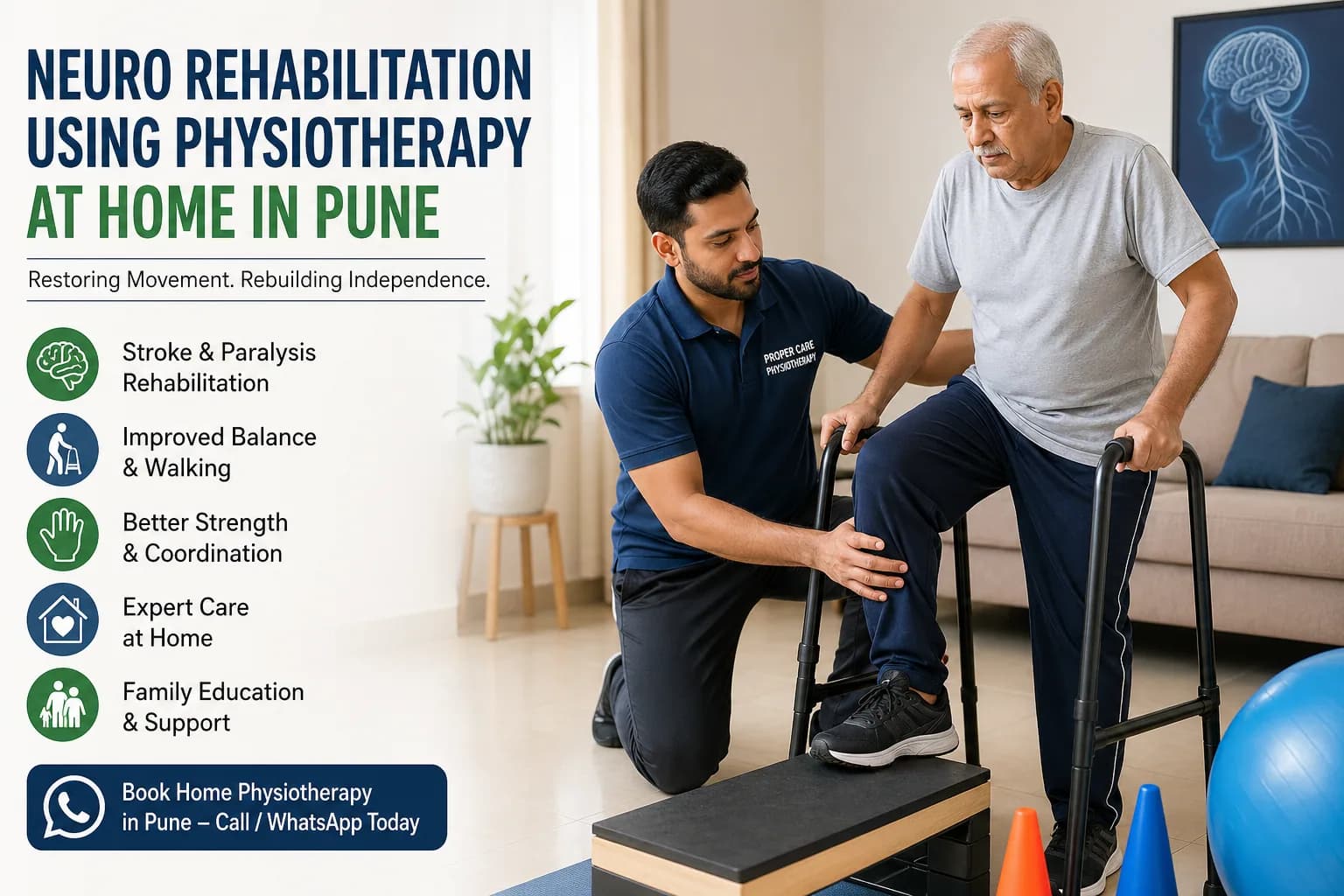
Walking after neurological injury can be affected by weakness, stiffness, poor coordination, fear, foot drop, or reduced weight bearing. Gait training may include step practice, posture correction, weight transfer, supported walking, walking aid training, and progressive distance practice. The therapist may also teach family members how to assist without pulling the patient unsafely.
Strengthening and Flexibility Exercises
Strengthening is important, but it must be specific and controlled. Exercises may focus on the hip, knee, ankle, trunk, shoulder, elbow, wrist, and grip depending on the patient's deficits. Stretching and mobility work help reduce tightness and maintain joint range.
Task-Specific Functional Training
Task-specific training means practicing real-life activities such as standing from a chair, transferring to a commode, walking to the door, climbing a step, reaching for a glass, or practicing hand use during daily tasks. This approach makes rehabilitation more meaningful and easier to apply at home.
Fall Prevention and Home Safety Advice
Falls are a major concern for neuro patients, especially elderly patients and those with balance issues. The physiotherapist may suggest changes such as removing loose rugs, improving lighting, using stable chairs, adjusting walking aids, clearing pathways, and supervising risky movements.
Benefits of Home Physiotherapy for Neuro Rehabilitation in Pune
Home physiotherapy is often a practical choice for neurological patients because travel can be tiring, unsafe, or inconvenient. A patient recovering from stroke, paralysis, spinal injury, or severe weakness may find it difficult to sit in traffic, climb clinic stairs, wait for appointments, or transfer in and out of vehicles. Home visits reduce that stress and make therapy easier to continue.
The biggest benefit is comfort. Patients often feel more relaxed in their own surroundings. Therapy can be planned around the actual home setup, including the bed, chair, bathroom, corridor, stairs, and walking area. This helps patients practice movements they truly need for daily independence.
Home physiotherapy also supports family education. Caregivers can observe sessions and learn how to help safely. This is important because neurological recovery depends on what happens throughout the day, not only during one therapy session. Correct positioning, safe transfers, daily walking practice, and regular home exercises can support progress.
For families in South Pune, services such as home physiotherapy in Pune can be useful when patients live in areas such as NIBM, Kondhwa, Yewalewadi, Katraj, Narhe, and nearby locations. If you are looking for location-focused care, you may also explore home physiotherapy in NIBM and Kondhwa, home physiotherapy in Kondhwa, and home physiotherapy in Yewalewadi.
Recovery Goals: What Progress Can Look Like
Recovery in neurological conditions is highly individual. Some patients improve quickly in the first few weeks, while others need long-term rehabilitation. The outcome depends on the diagnosis, severity, age, medical stability, motivation, family support, therapy consistency, and associated health conditions. A responsible physiotherapy plan avoids unrealistic promises and focuses on measurable goals.
Early goals may include reducing stiffness, preventing complications, improving bed mobility, sitting safely, and helping the patient participate in basic activities. Intermediate goals may include standing with support, transferring to a chair, walking with assistance, improving hand activity, and increasing endurance. Later goals may include independent walking, stair practice, community mobility, improved balance, and return to selected daily routines.
Small gains matter. For a neuro patient, being able to sit without falling, stand with less support, take safer steps, use the affected hand for support, or transfer to a chair with less help can significantly improve quality of life. These improvements can also reduce caregiver burden.
Progress should be reviewed regularly. If an exercise is too easy, it should be progressed. If it is unsafe or painful, it should be modified. If the patient is not improving as expected, the physiotherapist may reassess goals, consult the treating doctor when needed, and adjust the plan.
Role of Family and Caregivers in Neuro Rehab
Family support is one of the most important parts of home neuro rehabilitation. Caregivers help the patient practice safely, follow the home exercise plan, maintain routine, and avoid harmful habits. However, caregivers also need proper guidance because incorrect handling can increase pain, fear, or fall risk.
For example, pulling a stroke patient by the weak arm can cause shoulder pain or injury. Helping a patient walk without proper support can increase fall risk. Keeping the patient in bed for too long can worsen stiffness and weakness. A physiotherapist teaches safer alternatives, such as supporting the trunk, using correct transfer methods, positioning the arm properly, and encouraging active participation.
Caregivers should also observe fatigue. Neuro patients may tire quickly, and overtraining can reduce performance. Therapy should challenge the patient without exhausting them. Rest breaks, hydration, good nutrition as advised by the doctor, and proper sleep all support recovery.
Emotional encouragement is equally important. Many patients feel frustrated when movement is slow to return. Families should celebrate small improvements and maintain a calm, consistent routine. Recovery is often a marathon, not a sprint.
Why Choose Proper Care Physiotherapy Pune for Home Neuro Rehab?
Proper Care Physiotherapy Pune focuses on patient-centered home physiotherapy with practical rehabilitation goals. Neuro patients need more than a list of exercises. They need careful assessment, safety awareness, progressive training, caregiver education, and a plan that fits their home and daily routine.
The approach is built around trust, comfort, and consistency. Each session aims to help the patient move better, feel safer, and work toward meaningful independence. The physiotherapist explains exercises in plain language so patients and families understand what they are doing and why it matters. Treatment is adjusted according to tolerance, medical condition, and progress.
For patients with stroke or paralysis, related reading may include best paralysis physiotherapist in Katraj. For families searching locally, guides such as best physiotherapist near me in Narhe, Pune and pain relief starts here with a top physiotherapist in Pune may also help you understand available home care options.
If insurance documentation is important, you can read home physiotherapy and valid bills for insurance claims in Pune and how to claim insurance for physiotherapy bills in Pune. Coverage depends on the insurer and policy terms, so families should confirm directly with their insurance provider.
FAQ: Neuro Rehabilitation Using Physiotherapy
How soon should neuro physiotherapy start after a stroke or paralysis?
Physiotherapy often begins after the treating doctor confirms that the patient is medically stable. In many cases, early rehabilitation helps prevent stiffness, weakness, poor positioning, and loss of confidence. The first sessions may be gentle and focused on positioning, bed mobility, sitting balance, breathing, and safe movement. The exact timing should always follow medical advice, especially after stroke, surgery, ICU stay, or unstable blood pressure.
Can neuro rehabilitation be done at home?
Yes, many neurological patients can receive effective physiotherapy at home. Home rehab is especially useful when travel is difficult, the patient is weak, or the family wants training in the real home environment. The physiotherapist can work on bed transfers, chair practice, walking inside the house, bathroom safety, stair training, and caregiver education. Some patients may still need hospital or specialist review depending on their medical condition.
How long does neuro rehabilitation take?
The duration depends on the condition, severity, age, overall health, consistency of practice, and recovery goals. Some patients need a few weeks of focused support, while others benefit from several months of progressive rehabilitation. Neurological recovery is usually gradual, so regular reassessment is important. The aim is to improve function safely rather than rush the process.
Is neuro physiotherapy painful?
Neuro physiotherapy should not be forcefully painful. Some exercises may feel challenging, tiring, or mildly uncomfortable when stiff muscles and weak movements are being trained, but sharp pain should be avoided. The physiotherapist should modify exercises based on pain, fatigue, blood pressure, balance, and safety. Patients should always report discomfort during the session.
Book Home Neuro Physiotherapy in Pune
If your family member is recovering from stroke, paralysis, Parkinson's disease, nerve weakness, spinal injury, balance problems, or difficulty walking, guided physiotherapy at home can help make rehabilitation safer and more consistent. Proper Care Physiotherapy Pune provides home-based care focused on movement recovery, patient confidence, caregiver guidance, and practical daily independence.
Need neuro rehabilitation at home in Pune? Book a home physiotherapy visit with Proper Care Physiotherapy Pune. Call or WhatsApp today to discuss the patient's condition, location, and preferred appointment time.
Whether you are in NIBM, Kondhwa, Yewalewadi, Katraj, Narhe, or nearby South Pune areas, timely physiotherapy support can help patients take safer steps toward recovery. Start with an assessment, understand the goals, and build a treatment plan that fits the patient's real life at home.