Step-by-Step Stroke Rehab at Home Narhe 2026
Reviewed by Dr. Krishna, Lead Consultant Physiotherapist at Proper Care Physiotherapy
On this page
- Step-by-Step Stroke Rehabilitation at Home in Narhe (2026 Guide)
- Understanding Stroke Recovery (Simple but Important)
- Phase 1: First 7–14 Days at Home
- Phase 2: Weeks 3–6 (Starting Movement Again)
- Phase 3: Walking Training Begins (Weeks 6–12)
- Daily Routine for Home Stroke Rehab
- Common Mistakes I See in Narhe Patients
- How Family Members Can Help (Very Important)
- When Should You Call a Physiotherapist?
- Realistic Expectations (Let’s Be Honest)
- Final Words from My Experience
Step-by-Step Stroke Rehabilitation at Home in Narhe (2026 Guide)
I’ll be honest with you.
The first few days after a stroke are confusing. Families panic. Patients feel lost. And somewhere between hospital discharge and coming back home in areas like Narhe, the biggest question hits — “Now what?”
I’ve been treating stroke patients in Pune for more than 15 years, and if there’s one thing I’ve learned, it’s this — recovery doesn’t happen in hospital alone. Real recovery begins at home. On your bed. On your chair. In your daily routine.
Let me walk you through this step by step. Not textbook style. Not robotic advice. Real, practical, day-to-day rehab that actually works in homes in Narhe.
Understanding Stroke Recovery (Simple but Important)
Before we jump into exercises, you need to understand one basic thing.
Your brain is injured, not “dead.” That means it can relearn.
We call this neuroplasticity. Sounds fancy. But in simple terms — your brain finds new ways to do old tasks.
But here’s the catch.
If you don’t train it… it won’t happen.
That’s why structured home rehabilitation is non-negotiable.
Phase 1: First 7–14 Days at Home
This is where most families make mistakes.
Either they do nothing because they’re scared… or they overdo things and worsen the condition.
We need balance.
1. Proper Positioning (This Alone Changes Outcomes)
I always tell my patients — positioning is your first treatment.
How you lie, how you sit, how your arm rests… it all matters.
- Keep the affected arm supported with pillows
- Do NOT let the hand hang down
- Change position every 2 hours
- Avoid sleeping always on one side
Small detail. Big difference.
2. Passive Movements (Done by Caregiver)
At this stage, the patient may not move independently.
That’s okay.
You help them.
Slowly move:
- Shoulder (forward and sideways)
- Elbow bending
- Wrist rotations
- Finger opening and closing
Slow. Controlled. No jerks.
If pain appears, stop immediately.
3. Breathing Exercises
Most people ignore this.
They shouldn’t.
Stroke patients often develop weak lung function due to inactivity.
Simple deep breathing — 10 reps every hour — helps prevent complications.
Phase 2: Weeks 3–6 (Starting Movement Again)
This is where things get interesting.
You’ll start seeing small improvements. A finger twitch. Slight leg movement. Even a tiny grip.
That’s your green signal.
1. Assisted Active Exercises
Now the patient starts trying to move — with help.
For example:
- Patient tries to lift arm, caregiver supports
- Trying to bend knee while lying
- Sliding heel on bed
Don’t expect perfection.
Expect effort.
2. Sitting Balance Training
This is a major milestone.
Getting the patient to sit without falling sideways.
Start with:
- Sitting on bed with support
- Feet touching floor
- Holding position for 30 seconds → gradually increase
Some patients shake. Some lean.
Normal.
Stay patient.
3. Hand Function Stimulation
Hand recovery is slow. Frustrating too.
But don’t ignore it.
Use simple things at home:
- Squeeze a soft ball
- Hold a towel and pull
- Try picking small objects
Even if nothing happens initially… continue.
Phase 3: Walking Training Begins (Weeks 6–12)
This is the stage families wait for.
“Doctor, when will he walk?”
Here’s the truth — walking is possible, but only if earlier stages were done properly.
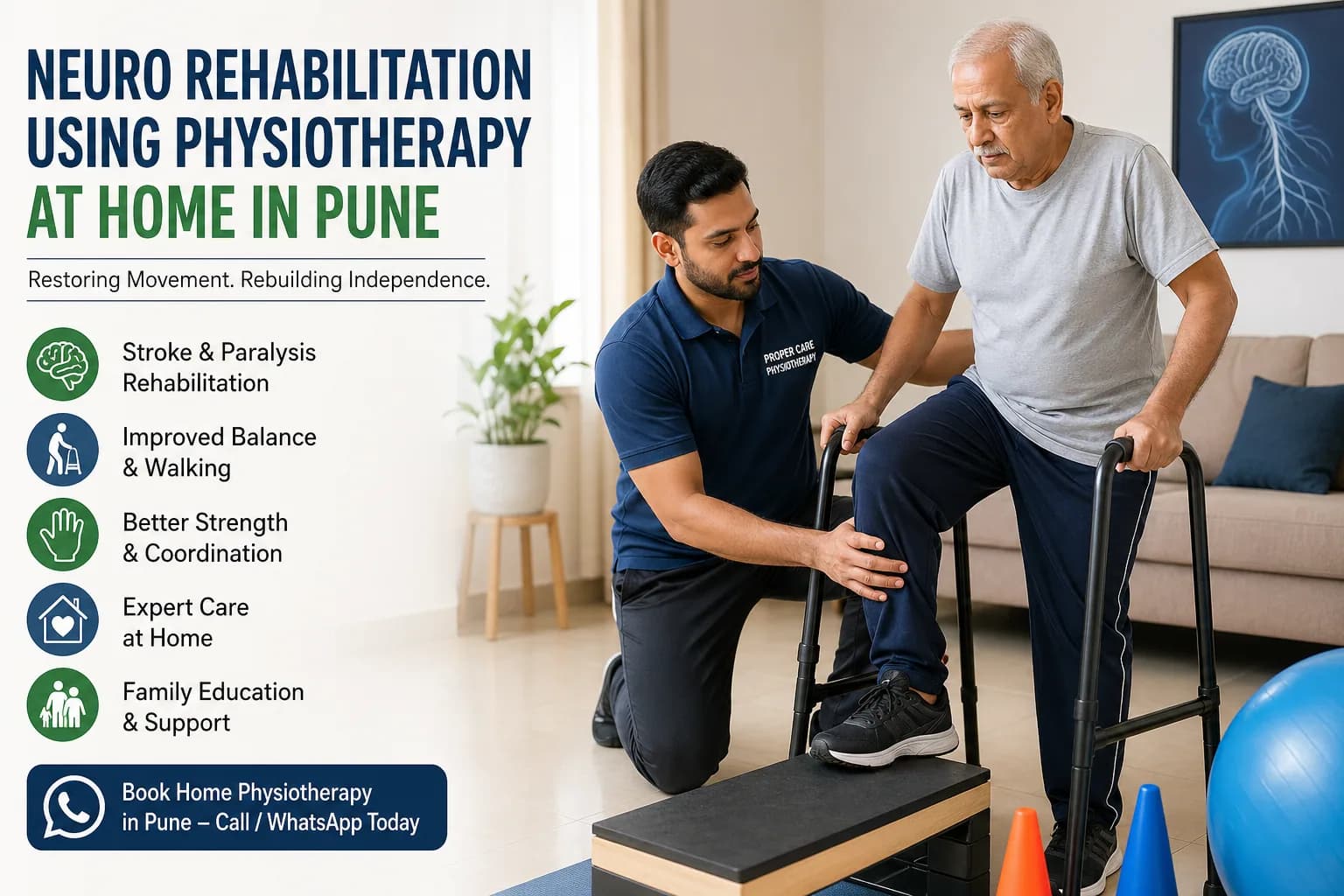
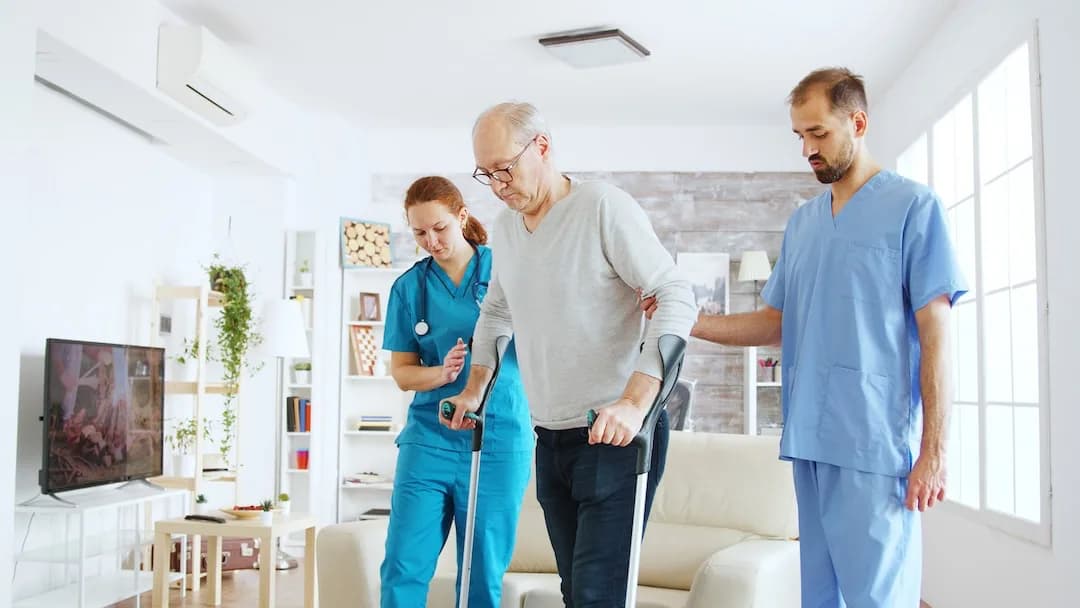
1. Standing with Support
First goal — stand safely.
- Use a walker or caregiver support
- Weight should be equally distributed
- Avoid leaning fully on one side
Initially, even 10 seconds is enough.
2. Weight Shifting Exercises
This is where we train balance.
Shift weight:
- Left to right
- Forward and backward
Slowly. Controlled.
This prepares the body for walking.
3. First Steps
And finally… steps.
Small. Assisted. Safe.
I always say — don’t chase speed. Chase control.
One correct step is better than ten unsafe ones.
Daily Routine for Home Stroke Rehab
Let me simplify everything into a real daily plan you can follow in Narhe homes.
Morning:
- Breathing exercises
- Passive/active movements
- Sitting balance
Afternoon:
- Hand exercises
- Bed mobility training
Evening:
- Standing practice
- Walking training (if ready)
Short sessions. Multiple times.
Not one long tiring session.
Common Mistakes I See in Narhe Patients
I’m going to be very direct here.
These mistakes slow down recovery more than the stroke itself.
1. Waiting Too Long to Start
Rehab delayed = recovery delayed.
2. Doing Random YouTube Exercises
Every stroke is different. Copy-paste rehab doesn’t work.
3. Ignoring the Affected Hand
Patients focus only on walking. Hand gets neglected.
4. Overprotective Family
If you do everything for the patient… they won’t relearn anything.
5. No Professional Guidance
Home rehab doesn’t mean no physiotherapist. It means guided therapy at home.
How Family Members Can Help (Very Important)
Recovery is not a one-person job.
Family plays a huge role.
Here’s how you can actually help:
- Encourage, don’t force
- Allow patient to try tasks independently
- Stay consistent with exercises
- Celebrate small improvements
Sometimes, emotional support matters more than physical help.
When Should You Call a Physiotherapist?
Honestly?
As early as possible.
If you’re in Narhe or nearby areas of Pune, home physiotherapy can completely change the outcome.
You should definitely seek help if:
- No improvement after 2–3 weeks
- Severe stiffness or pain develops
- Patient is unable to sit or stand
- You’re unsure what exercises to do
Because doing wrong rehab is worse than doing no rehab.
Realistic Expectations (Let’s Be Honest)
I don’t give false hope.
But I also don’t underestimate recovery.
Here’s what I tell every patient:
- First 3 months — fastest recovery phase
- 6 months — significant functional gains
- 1 year — continued improvement possible
Some patients walk independently.
Some need support.
But almost everyone improves — if rehab is consistent.
Final Words from My Experience
I’ve seen patients come in completely dependent… and walk out with confidence months later.
Not because of magic treatment.
Because of discipline. Routine. Correct guidance.
If you or your family member is recovering from stroke in Narhe, don’t wait for “perfect time.”
Start now.
Start small.
But start correctly.
And remember — recovery is not a straight line.
Some days will feel slow. Some frustrating.
That’s normal.
Just don’t stop.
We’ll take it one step at a time. Literally.