Gullian bare syndrome (GBS) physiotherapy
Reviewed by Dr. Krishna, Lead Consultant Physiotherapist at Proper Care Physiotherapy

On this page
- Understanding Guillain-Barré Syndrome (GBS)
- The Critical Role of Physiotherapy in GBS Recovery
- Phases of GBS Rehabilitation and Physiotherapy Focus
- Our Home Physiotherapy Approach for GBS in Pune
- Specific Physiotherapy Techniques You Might Experience
- When to Seek Urgent Medical Attention
- Partnering in Your Recovery Journey
Gullian-Barré Syndrome (GBS) is a rare but serious condition where your body's immune system mistakenly attacks its own peripheral nerves. This can lead to muscle weakness, tingling sensations, and sometimes even paralysis. While the onset can be sudden and alarming, many individuals make significant recoveries with timely medical treatment and dedicated rehabilitation.
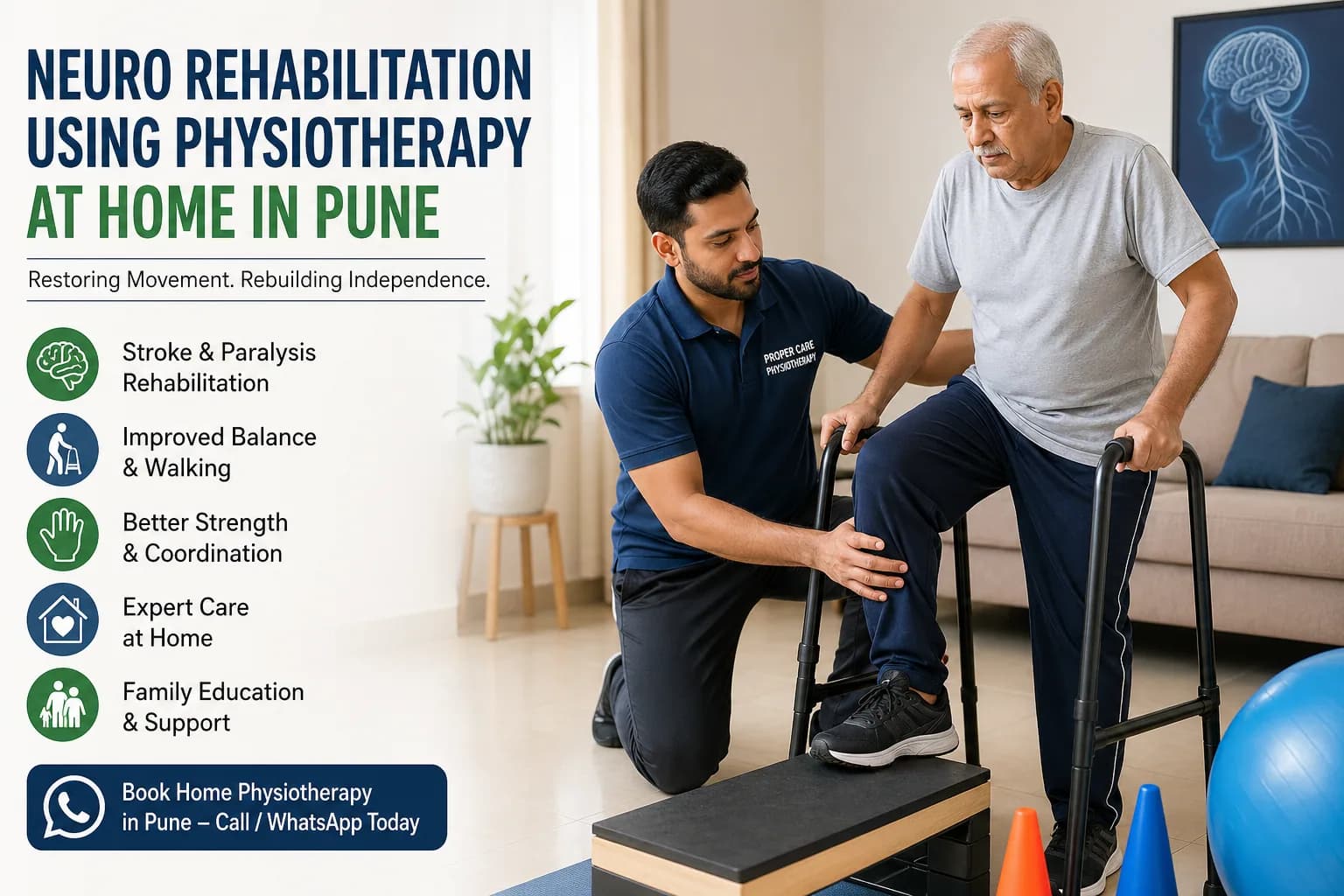
For patients in Pune diagnosed with GBS, navigating the recovery journey can be overwhelming. This is where home physiotherapy plays a crucial role. Our experienced physiotherapists bring expert care directly to your doorstep, providing personalised treatment plans designed to support your recovery in the comfort and familiarity of your own home.
Understanding Guillain-Barré Syndrome (GBS)
GBS is an autoimmune disorder affecting the peripheral nervous system, the network of nerves outside your brain and spinal cord. These nerves are vital for carrying signals between your brain, spinal cord, and muscles. When they are attacked, communication is disrupted, leading to symptoms like progressive muscle weakness, numbness, tingling sensations, and difficulty with movement.
Symptoms often begin in the legs and feet, potentially spreading upwards to affect the arms, face, and even muscles involved in breathing. The severity of GBS can vary greatly, with some experiencing mild weakness and others facing temporary paralysis. While the exact cause isn't always clear, GBS often follows a bacterial or viral infection.
The Critical Role of Physiotherapy in GBS Recovery
Physiotherapy is an absolutely essential component of GBS recovery. It doesn't directly cure GBS, but it is the most effective treatment to restore strength, balance, and mobility, helping patients regain independence and reduce long-term disability after nerve damage.
Without physical activity, patients with GBS face risks of muscle atrophy (wasting), joint stiffness, and a decline in overall function. Our physiotherapists work to help the nervous system reconnect with muscles and relearn lost movement patterns, guiding you safely through each stage of your recovery.
Phases of GBS Rehabilitation and Physiotherapy Focus
Recovery from GBS typically involves distinct phases, and physiotherapy goals are adapted for each one.
Acute/Progressive Phase (Onset to Peak Severity)
This phase, lasting from a few days to about four weeks, is when symptoms rapidly worsen and reach their peak. During this critical time, often in a hospital setting, physiotherapy focuses on preventing complications.
- Maintaining Joint Range: Gentle passive range of motion (PROM) exercises are crucial to prevent joints from stiffening (contractures) and to maintain flexibility.
- Positioning: Proper bed positioning helps prevent pressure sores and supports comfortable alignment.
- Respiratory Care: Chest physiotherapy and breathing exercises are vital, especially if respiratory muscles are affected, to prevent infections and improve lung capacity.
Plateau Phase (Symptoms Stabilise)
During this phase, symptoms stabilise, and there is no significant improvement yet, but also no further worsening. Physiotherapy continues to be crucial to prevent secondary complications and prepare for the recovery phase.
- Gentle Mobilisation: Active-assisted exercises are introduced as tolerated, where the physiotherapist helps with movements.
- Bed Mobility and Transfers: Focus shifts to improving ability to move in bed and transfer safely, for instance, from bed to a chair.
- Early Sitting Balance: Gradually working on supported sitting balance.
Recovery Phase (Gradual Improvement)
This is where nerve regeneration begins, and gradual improvement in muscle strength and function occurs, which can take months to even years. Physiotherapy during this phase is intensive and progressive.
- Progressive Strengthening: Exercises are carefully advanced to rebuild muscle strength and endurance. This includes isometric strengthening (contracting muscles without moving the joint) and later, resistance training.
- Balance and Coordination: Specific exercises are used to improve balance, coordination, and proprioception (your body's awareness of its position in space), which are often impaired.
- Gait Training: As strength returns, walking practice begins, initially with assistive devices like walkers, progressing towards independent gait.
- Functional Activities: Training for daily tasks like standing up from a chair, climbing stairs, and reaching for objects.
- Aerobic Conditioning: Light aerobic exercises, when appropriate, can improve stamina and reduce fatigue.
Our Home Physiotherapy Approach for GBS in Pune
Receiving physiotherapy at home offers significant advantages for GBS patients, especially in a city like Pune. The comfort of your familiar surroundings can reduce stress and fatigue, which are important considerations during recovery.
Our home-visit physiotherapists provide:
- Personalised Treatment Plans: Every GBS journey is unique. We conduct a thorough assessment to understand your specific needs, challenges, and goals, creating a tailored rehabilitation program that evolves with your progress.
- Reduced Travel Burden: Eliminating the need to travel to a clinic can save valuable energy, allowing you to focus more on your recovery.
- Family Involvement: We guide family members on how to safely assist with exercises and daily activities, making them an integral part of the rehabilitation process.
- Holistic Care: Beyond physical exercises, we also focus on pain management, energy conservation techniques, and providing education and emotional support to both patients and their families.
Specific Physiotherapy Techniques You Might Experience
Our physiotherapists employ a range of evidence-based techniques to support GBS recovery:
- Manual Therapy: Gentle hands-on techniques to improve joint mobility, reduce stiffness, and manage pain.
- Therapeutic Exercises: A carefully graded program of exercises focusing on strength, endurance, balance, and coordination.
- Neuromuscular Re-education: Techniques to help re-establish the connection between your brain and muscles, improving motor control.
- Assistive Device Training: Guidance on using walkers, canes, or other aids to ensure safe mobility as you regain strength.
- Respiratory Physiotherapy: Specific breathing exercises and techniques to maintain or improve lung function.
When to Seek Urgent Medical Attention
While physiotherapy is crucial for recovery, GBS can sometimes present symptoms that require immediate medical review. It's vital to be aware of these red flags and act quickly. Call for emergency medical help immediately if you or your loved one experiences any of the following:
- Sudden difficulty breathing or shortness of breath: This is a critical sign that the muscles controlling breathing might be affected.
- Trouble swallowing or choking on food/liquids: This indicates involvement of facial or throat muscles.
- Rapidly spreading weakness: If weakness worsens very quickly, making it impossible to stand, walk, or lift arms.
- Facial paralysis: Inability to close eyes, move the face, or speak clearly (slurred speech).
- Chest pain or irregular heartbeat: These can indicate autonomic nervous system involvement.
Do not wait if these symptoms appear; seek immediate medical attention.
Partnering in Your Recovery Journey
Recovering from GBS is a journey that requires patience, perseverance, and a strong support system. Our team is committed to partnering with you every step of the way, providing expert care, encouragement, and guidance. We understand the challenges and celebrate every milestone, big or small.
With consistent, appropriate physiotherapy delivered at home, many individuals with GBS can achieve significant functional recovery and return to their daily lives with renewed independence.