Stroke Rehabilitation at Home in Ambegaon: 30-Day Timeline
Reviewed by Dr. Krishna, Lead Consultant Physiotherapist at Proper Care Physiotherapy · Updated
Why This Ambegaon Case Pattern Matters
After stroke, many families delay physiotherapy because travel is difficult, the patient is weak, or safe transfers are unclear. For Ambegaon households near Katraj and Narhe approach roads, home rehabilitation can begin with the exact problems the family is facing: bed mobility, sitting balance, supported standing, walking practice, and safe caregiver assistance.
Days 1 to 7: Safety, Positioning, and Early Activation
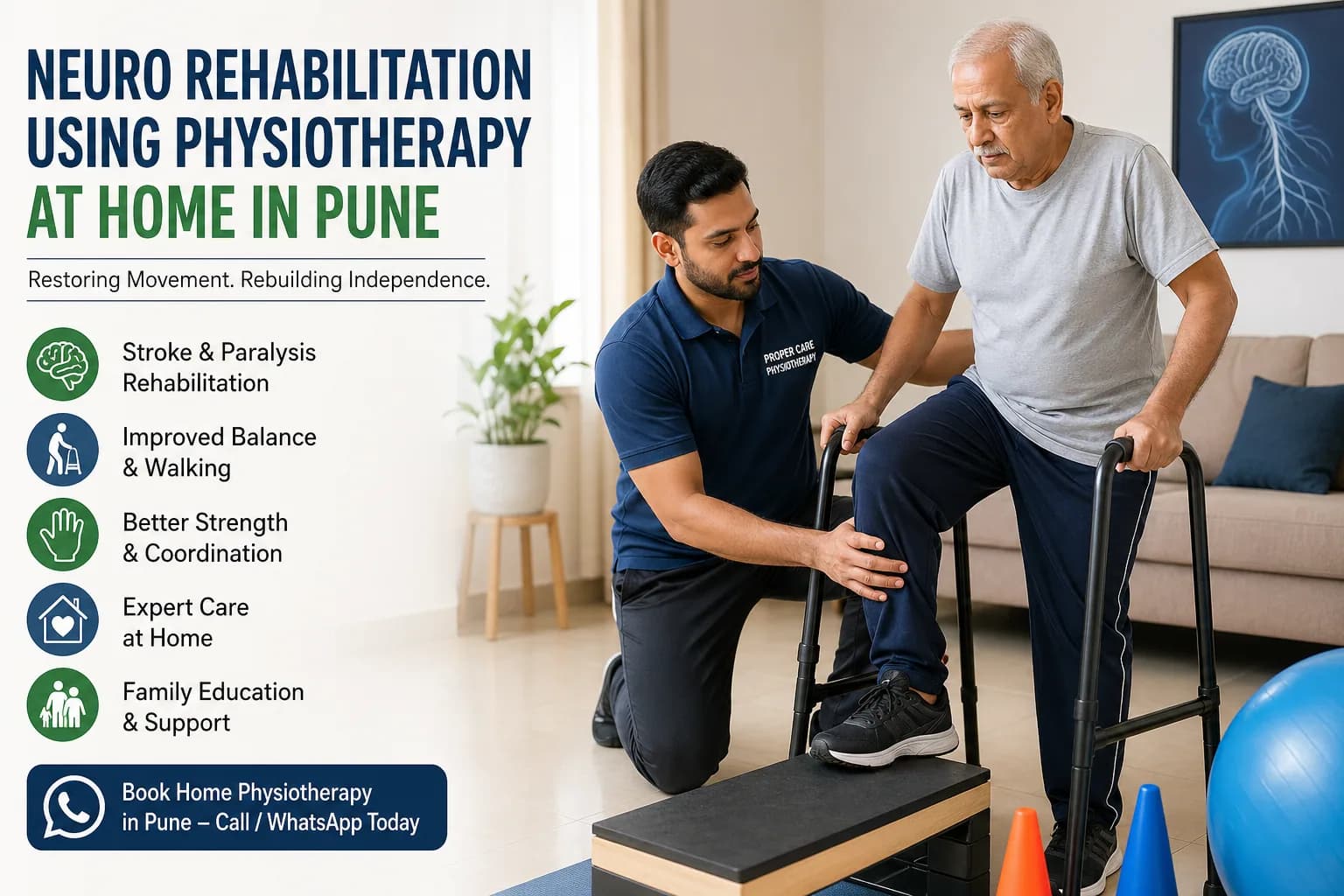
The first week focuses on preventing secondary complications and building confidence. The therapist checks sitting balance, shoulder protection, tone, early limb activation, transfer ability, swallowing or speech-related referral needs, and fall risk. Caregivers are trained to assist without pulling the affected arm or forcing unsafe walking.
Days 8 to 21: Task Practice and Gait Foundations
Once basic safety improves, sessions should shift toward repeated task practice. This may include sit-to-stand control, weight shift, supported stepping, ankle and knee control, trunk activation, and short indoor walking. Progress is measured by assistance level, step quality, fatigue, balance reactions, and the patient ability to repeat the home program between visits.
Days 22 to 30: Independence Targets
By the fourth week, realistic goals may include safer bed-to-chair transfers, improved standing tolerance, short supervised walking, better arm positioning, and a clearer caregiver routine. Not every patient improves at the same speed, so the plan must be adjusted for stroke severity, medical stability, cognition, family support, and home layout.
When to Escalate Care
Urgent medical review is needed for sudden worsening weakness, new confusion, chest pain, severe headache, breathlessness, repeated falls, fever, or signs of another neurological event. Physiotherapy is part of stroke recovery, but it must remain coordinated with the treating physician.