Every Need Of Physiotherapy At Home In Camp, Pune
Author / Clinical Review
Dr. Krishna
Lead Consultant Physiotherapist
Camp is one of Pune's most active neighbourhoods, but for a person living with knee pain, back pain, weakness after surgery, stroke-related movement difficulty, or age-related balance issues, even a short trip outside can feel like a major task. A clinic visit may involve stairs, traffic, waiting time, pain during travel, and the worry of getting tired before treatment even begins. This is where physiotherapy at home in Camp becomes more than a convenience. It becomes a practical way to start recovery in the same environment where the patient actually needs to move, sit, stand, walk, bathe, climb steps, and return to daily routine.
Home physiotherapy is not simply a therapist coming with a few exercises. A good home session includes assessment, clinical reasoning, pain and movement analysis, treatment planning, exercise progression, caregiver guidance, and safety checks. For many families in Camp, Pune, it also gives reassurance: the patient receives one-to-one care without unnecessary travel, while relatives can understand what to do between sessions.
This guide explains when home physiotherapy Camp Pune services are useful, what happens during a visit, how different conditions are treated, what red flags need medical attention, and how Proper Care Physiotherapy Pune approaches safe, personalised rehabilitation at home.
When Should You Choose Physiotherapy at Home Instead of Visiting a Clinic?
A clinic visit is useful for many patients, especially when specialised equipment or supervised gym-based strengthening is required. But home physiotherapy is often a better starting point when pain, weakness, imbalance, age, surgery, neurological symptoms, or transport difficulty makes travel unsafe or exhausting.
Patients in Camp commonly search for physiotherapy near me Camp Pune because they need quick, local support for a real-life problem: a parent unable to walk confidently after illness, a working adult with back pain aggravated by sitting, a patient discharged after knee replacement, or someone recovering from stroke who cannot manage stairs. In these situations, a physiotherapist home visit Camp service can assess the patient in the exact space where the problem occurs.
Home care may be especially suitable if the patient has difficulty getting into a car, needs assistance for transfers, feels dizzy or unsteady, has recent surgical restrictions, has severe pain during travel, or needs caregiver training. It is also helpful when the goal is functional recovery: walking from bed to bathroom, getting up from a low chair, using a walker safely, or climbing a few steps at home.
However, home physiotherapy should remain medically responsible. If the patient has sudden chest pain, new facial drooping, sudden speech difficulty, unexplained severe weakness, fever after surgery, calf swelling with breathlessness, loss of bladder or bowel control with back pain, or a fall with suspected fracture, physiotherapy should wait and urgent medical evaluation is needed.
What Problems Can a Home Physiotherapist Treat in Camp, Pune?
Home physiotherapy can support a wide range of musculoskeletal, neurological, post-operative, and geriatric conditions. The treatment plan depends on the diagnosis, current irritability of symptoms, medical history, age, home environment, and patient goals.
For pain-related conditions, common concerns include lower back pain, neck pain, sciatica, shoulder stiffness, knee arthritis, heel pain, muscle strain, and joint stiffness. For surgical recovery, patients may need help after total knee replacement, hip surgery, spine surgery, fracture fixation, ligament repair, or long hospitalisation. For neurological rehabilitation, home visits may help after stroke, paralysis, Parkinson's disease, balance disorders, spinal cord injury, or nerve weakness.
For elderly patients, the need may be broader than one painful joint. Many seniors need strength training, fall prevention, walking practice, breathing exercises, posture correction, bed mobility training, and confidence building. This is why elderly physiotherapy Camp Pune should be planned carefully, not treated as a generic exercise routine.
Proper Care Physiotherapy Pune provides home-based care for pain relief, mobility improvement, neuro rehabilitation, elderly care, and post-surgery recovery. Patients looking for the wider service can also read about Expert Home Visit Physiotherapy in South Pune.
How a Home Visit Assessment Finds the Real Cause Behind Pain or Weakness
Good physiotherapy begins with assessment, not with a ready-made exercise list. Two patients may both say they have knee pain, but one may have arthritis-related load sensitivity, another may have post-surgical stiffness, and another may be overloading the knee because of hip weakness or poor walking mechanics. The treatment should not be identical.
During a home visit, the physiotherapist usually asks about the onset of symptoms, pain location, aggravating activities, easing factors, previous treatment, current medicines, medical history, surgery details if any, and the patient's most important daily goals. The therapist may observe posture, walking pattern, balance, joint movement, muscle strength, swelling, tenderness, nerve symptoms, breathing effort, and functional tasks such as sit-to-stand, turning, bed mobility, or stair negotiation.
The home itself gives valuable information. A slippery bathroom floor, low sofa, narrow passage, loose rugs, poor lighting, or an unsuitable walking aid can delay recovery or increase fall risk. In Camp homes where space may vary from older buildings to apartments, this environmental assessment is often as important as the exercise plan.
Assessment also helps decide treatment intensity. If symptoms are highly irritable, the first goal may be pain control, gentle movement, positioning, and education. If the patient is stable but weak, the plan can gradually shift towards strengthening, endurance, balance, and task-specific training.
Back Pain, Sciatica, and Neck Pain: Why the First Step Is Not Always Stretching
Many people with back pain try random stretches before understanding what type of pain they have. Some improve, but others feel worse because the exercise does not match the condition. Back pain physiotherapy Camp Pune should begin by checking whether pain is mainly mechanical, nerve-related, posture-linked, stiffness-dominant, strength-related, or associated with a medical red flag.
A patient with pain that increases after long sitting may need movement breaks, hip mobility, trunk endurance, and workstation changes. A patient with sciatica-like pain may need nerve-sensitive positioning, graded walking, careful loading, and avoidance of repeated movements that increase leg symptoms. A patient with acute spasm may first need pain modulation, breathing, gentle mobility, and reassurance before strengthening begins.
Home physiotherapy can include manual therapy when appropriate, guided mobility exercises, core control, hip strengthening, nerve gliding, posture advice, walking progression, and education about pain. Pain science is important here. Not all pain means damage, but persistent or worsening symptoms should not be ignored. A physiotherapist helps the patient understand safe movement, acceptable discomfort, and when to pause.
For condition-specific support, patients can explore Expert Back Pain Physiotherapy in South Pune, Sciatica Pain Relief & Physiotherapy, and Slip Disc Physiotherapy.
Knee Pain, Arthritis, and Walking Difficulty: What Recovery Looks Like at Home
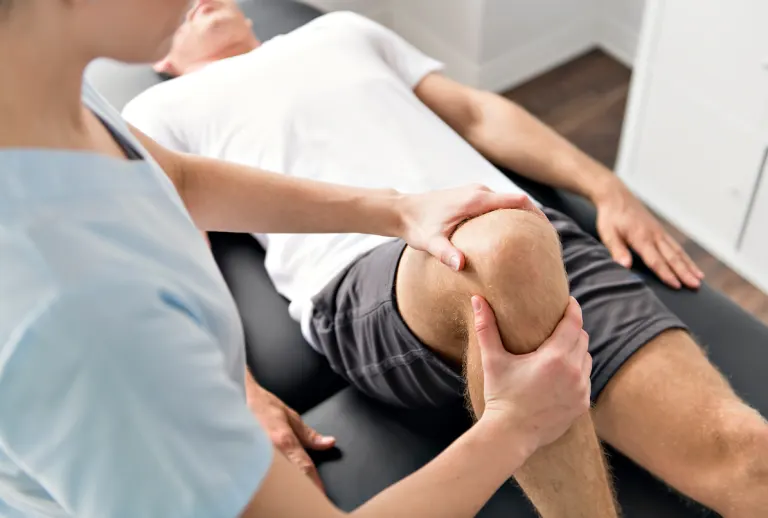
Knee pain physiotherapy Camp is commonly needed for arthritis, post-injury pain, weakness after rest, post-operative recovery, and difficulty with stairs. The knee often hurts not only because of the joint itself but also because of reduced hip strength, poor ankle mobility, weight-bearing fear, altered walking, or sudden changes in activity.
In the early stage, the focus may be pain reduction, swelling control, gentle range of motion, safe walking, and avoiding repeated overloading. As symptoms settle, the plan can include quadriceps strengthening, hip strengthening, calf work, balance training, step practice, and gradual return to household or outdoor walking. For arthritis, the goal is not to force the knee into painful movements. The aim is to improve load tolerance so the patient can stand, walk, climb stairs, and manage daily tasks with less difficulty.
Exercise progression should be logical. A patient may begin with supported knee bends or bed-based exercises, then move to sit-to-stand, mini squats, step-ups, resistance exercises, and longer walking intervals. Pain during and after exercise is monitored. A mild, short-lasting ache may be acceptable in some cases, but swelling, limping, night pain, or worsening next-day pain suggests the load may be too high.
For more focused care, see Expert Knee Pain Physiotherapy in Pune. Patients recovering after knee replacement may also find TKR Physiotherapy: Recovery Guide That Works useful.
Stroke, Paralysis, and Neuro Recovery: Why Home-Based Practice Matters
Stroke rehabilitation at home Pune is often needed after hospital discharge, when the patient is medically stable but still has weakness, stiffness, balance problems, speech-related frustration, altered sensation, shoulder pain, or difficulty walking. Neuro rehabilitation is different from general strengthening because it focuses on helping the brain and nervous system relearn movement through repeated, meaningful, task-specific practice.
At home, therapy can be built around real tasks: rolling in bed, sitting balance, standing from a chair, transferring to the toilet, stepping safely, reaching for objects, using the affected arm, and walking with or without an aid. The physiotherapist may work on muscle activation, balance reactions, gait training, spasticity management, postural control, coordination, endurance, and caregiver handling.
Realistic expectations are important. Recovery after stroke or paralysis varies depending on the area of the brain or nerve affected, severity, time since injury, age, other medical conditions, and practice consistency. Some patients make rapid gains in the first few weeks, while others need longer rehabilitation focused on independence, safety, and prevention of complications.
Families should avoid two extremes: giving no movement out of fear, or forcing unsafe walking before the patient has enough control. A structured plan helps bridge this gap. For deeper reading, see Neuro Rehabilitation Using Physiotherapy at Home in Pune and Stroke Rehabilitation in Pune.
Post-Surgery Physiotherapy at Home: Safe Progress Without Rushing
Post surgery physiotherapy Camp can be essential after joint replacement, fracture fixation, ligament surgery, spine surgery, abdominal surgery, or long hospital admission. After surgery, patients often receive basic instructions, but they may still feel unsure about how much to walk, how to climb stairs, how to manage swelling, or which exercises are safe.
A home physiotherapist considers the surgeon's protocol, wound status, pain level, swelling, weight-bearing instructions, precautions, and the patient's functional needs. Early rehabilitation may focus on breathing exercises, circulation exercises, gentle range of motion, bed mobility, safe transfers, walking with an aid, and swelling management. Later stages include strength, balance, endurance, stair training, and return to daily activity.
Progress should not be judged only by pain. After surgery, the therapist also tracks range of motion, swelling response, walking quality, muscle control, fatigue, confidence, and ability to perform daily tasks. A patient who walks more but limps heavily may need better gait retraining rather than simply longer walking.
Medical referral is needed if there is fever, wound discharge, sudden severe pain, marked calf swelling, breathlessness, chest pain, sudden loss of movement, or unusual redness and heat around the surgical area. For planned rehabilitation support, visit Post-Operative Rehabilitation.
Elderly Physiotherapy in Camp: Strength, Balance, Confidence, and Fall Prevention
For older adults, physiotherapy is often about protecting independence. A senior may not complain of severe pain, yet may avoid walking, stop going downstairs, hold furniture while moving, struggle to rise from a chair, or become fearful after one fall. These signs deserve attention.
Home physiotherapy for elderly patients usually includes strength training, balance exercises, walking practice, flexibility work, posture correction, breathing exercises, and education for safe daily movement. The therapist may also check whether the walking aid is the right height, whether the patient is using footwear safely, and whether home hazards can be reduced.
Caregiver involvement is especially valuable. A family member can learn how to assist sit-to-stand, how much support to give during walking, how to encourage practice without rushing, and how to notice fatigue. Overhelping can sometimes reduce independence, while under-supporting can increase fall risk. The goal is the right amount of help at the right stage.
Progress may look small at first: standing for a few more seconds, taking safer turns, walking to the bathroom with less help, or climbing one step with confidence. These changes matter because they reduce dependence in daily life. For more support, see Physiotherapy for Elderly Patients.
What Happens During a Physiotherapist Home Visit in Camp?
A typical first home visit includes discussion, assessment, treatment, exercise teaching, and a plan for follow-up. The session may begin with understanding the main complaint and the patient's daily routine. The physiotherapist then checks movement, strength, pain behaviour, balance, walking, and functional ability. If the patient has reports, discharge summaries, X-rays, MRI findings, or a doctor's prescription, these can help guide decisions.
Treatment may include hands-on techniques, mobility exercises, strengthening, balance training, gait training, breathing work, posture correction, pain-relief strategies, and education. The therapist may demonstrate exercises and then watch the patient perform them to correct speed, range, breathing, alignment, and safety.
The patient or caregiver should ask practical questions: which exercises to do daily, which activities to avoid temporarily, how to use heat or ice if advised, how much walking is safe, when to increase repetitions, and what symptoms should be reported. Clear instructions reduce confusion between sessions.
For some patients, one visit may be enough to assess and guide. Others need a structured plan over several weeks. Frequency depends on condition severity, safety needs, stage of recovery, caregiver support, and how well the patient can continue exercises independently.
How Exercise Progression Is Decided: Pain, Load, Strength, and Function
One of the biggest mistakes in recovery is doing either too little or too much. Too little movement can increase stiffness, weakness, fear, and dependence. Too much load can irritate tissues, increase swelling, or worsen symptoms. Physiotherapy helps find the middle path.
Progression is based on how the body responds. The physiotherapist may increase repetitions, resistance, range, walking distance, balance challenge, or task complexity only when the patient shows reasonable control. For example, a knee pain patient may progress from supported exercises to sit-to-stand and then to step training. A stroke patient may progress from sitting balance to supported standing, weight shifting, stepping, and walking practice. A back pain patient may progress from gentle mobility to endurance and strengthening.
Good load management includes monitoring symptoms during exercise, later the same day, and the next morning. If pain settles quickly and function improves, the load may be acceptable. If pain spreads, swelling increases, walking worsens, or sleep is disturbed, the plan may need adjustment.
Recovery is rarely a straight line. A responsible physiotherapy plan allows steady progress while respecting pain, healing stage, medical precautions, and the patient's confidence.
Home Safety and Caregiver Tips That Improve Recovery Between Sessions
Many improvements happen outside the physiotherapy session. The patient may be with the therapist for less than an hour, but the rest of the day includes walking, sitting, bathing, sleeping, meals, and repeated transfers. Small changes at home can make therapy safer and more effective.
- Keep walking paths clear of loose wires, rugs, and low obstacles.
- Use supportive footwear instead of slippery sandals during walking practice.
- Place frequently used items within easy reach to avoid unsafe bending or twisting.
- Ensure good lighting, especially for night-time bathroom visits.
- Use a stable chair with armrests for sit-to-stand practice when needed.
- Follow the walking aid instructions given by the physiotherapist instead of changing height or side randomly.
- Avoid forcing painful movements or comparing recovery with another patient.
- Keep a simple log of exercises, pain response, walking distance, and any falls or near-falls.
Caregivers should support independence without creating fear. Encouragement, patience, and correct assistance often matter as much as the exercises themselves.
How to Choose a Trusted Home Physiotherapist in Camp, Pune
When searching for physiotherapist home visit Camp, families should look beyond availability alone. The therapist should assess before treating, explain the likely problem in understandable language, respect medical precautions, give clear home instructions, and know when to refer back to a doctor.
Trust also comes from realistic communication. A responsible physiotherapist should not promise overnight cure, guaranteed recovery, or one-session results for complex problems. Pain relief may occur quickly in some cases, but strength, balance, walking confidence, post-surgery recovery, and neurological rehabilitation usually need consistent effort.
Documentation may also matter, especially for patients planning reimbursement. If you need bills or treatment notes, ask in advance what details can be provided. You can read How to Claim Insurance for Physiotherapy Bills in Pune and Home Physiotherapy & Valid Bills for Insurance Claims in Pune for practical guidance.
Proper Care Physiotherapy Pune focuses on personalised home physiotherapy for pain relief, elderly mobility, post-surgery rehabilitation, stroke recovery, and safe functional improvement. The aim is not only to reduce symptoms, but to help the patient move better in daily life.
Local Care for Camp and Nearby Pune Areas
Camp is well connected to central and south Pune, but traffic, parking, and patient mobility can still make repeated clinic visits difficult. Home physiotherapy can be useful for families living around Camp, MG Road, East Street, Pune Cantonment, Wanowrie-side access roads, Swargate-connected routes, and nearby residential pockets where travel may be tiring for elderly or post-operative patients.
Patients outside Camp can also explore nearby location information such as NIBM, Kondhwa, and Yewalewadi. For area-specific reading, the blog on Best Physiotherapist in NIBM Pune may also be useful.
Suggested Blogs for Further Reading
If you are comparing conditions or planning care for a family member, these related guides may help you understand the next step more clearly.
- Neuro Rehabilitation Using Physiotherapy at Home in Pune
- TKR Physiotherapy: Recovery Guide That Works
- Step-by-Step Stroke Rehab at Home Narhe 2026
- Pain Relief Starts Here | Top Physiotherapist in Pune Near You
FAQ: Physiotherapy at Home in Camp, Pune
1. How do I know if I need physiotherapy at home or clinic-based treatment?
Choose home physiotherapy if travelling increases pain, the patient is elderly or unsteady, there has been recent surgery, walking is difficult, or the main goal is safe movement inside the house. Clinic-based treatment may be useful later if advanced equipment or gym-based strengthening is needed. Many patients start at home and shift to clinic or independent exercise once they are safer and stronger.
2. Can home physiotherapy help with both knee pain and back pain?
Yes, home physiotherapy can help with knee pain, back pain, neck pain, sciatica, arthritis-related stiffness, and weakness, provided the treatment is based on proper assessment. The physiotherapist will check movement, strength, posture, walking pattern, pain triggers, and daily activities before selecting exercises or manual techniques.
3. Is stroke rehabilitation at home effective after hospital discharge?
Home-based stroke rehabilitation can be very useful when the patient is medically stable and needs repeated practice of sitting, standing, transfers, balance, walking, and arm use. The home setting allows therapy to focus on real daily tasks. Recovery depends on severity, time since stroke, medical condition, consistency, and family support.
4. How many home physiotherapy sessions are usually needed?
The number of sessions varies. A mild pain problem may need only a few visits with a home exercise plan, while post-surgery recovery, elderly fall prevention, or neuro rehabilitation may need several weeks or longer. After the first assessment, the physiotherapist can suggest a realistic frequency based on goals, safety, and progress.
Book Home Physiotherapy in Camp, Pune
If you are looking for physiotherapy at home in Camp for pain relief, post-surgery recovery, elderly care, mobility training, knee pain, back pain, or stroke rehabilitation, Proper Care Physiotherapy Pune can help you plan the next safe step. Share the patient's age, main problem, diagnosis if available, surgery or hospital details if any, current walking ability, and location in Camp.
To book a home visit, call or WhatsApp Proper Care Physiotherapy Pune and request an appointment for home physiotherapy Camp Pune. A careful assessment, practical treatment plan, and clear home guidance can make recovery safer, calmer, and more manageable for both the patient and family.
Clinical References
These references support the clinical education on this page. They do not replace an individual assessment or medical advice from your treating doctor.
- World Health Organization: Rehabilitation World Health Organization
- NICE NG59: Low back pain and sciatica in over 16s National Institute for Health and Care Excellence
- Proper Care anonymized outcomes: Back pain physiotherapy in Katraj Proper Care Physiotherapy
- AHA/ASA stroke rehabilitation guidance American Heart Association / American Stroke Association
- Proper Care anonymized outcomes: Stroke rehabilitation in South Pune Proper Care Physiotherapy
Medical Disclaimer
This article is for educational awareness and should not replace an in-person medical assessment, diagnosis, or emergency care. If symptoms are severe, rapidly worsening, or medically urgent, please contact the appropriate doctor or emergency service immediately.
Focus Keywords
Suggested Blogs
Home Physiotherapy
Back Pain Home Physiotherapy in In: Clinical Triage and Recovery Plan
A clinical guide for Pune patients with desk-job neck pain, back pain, and posture-related stiffness, explaini
Home Physiotherapy
How to Get Patients from Google Map as a Physiotherapist
Home Physiotherapy
How to charge more as physiotherapist jn 2026
Reviewed By Clinical Expert

Dr. Krishna
Lead Consultant Physiotherapist
This article is published for patient education and reviewed with a clinical home-physiotherapy perspective focused on neuro rehabilitation, orthopedic care, and mobility recovery in Pune.
Need Help Choosing The Right Home Physiotherapy Plan?
Speak with Proper Care Physiotherapy for symptom guidance, home-visit availability, and a faster path to the right recovery plan in Pune.