Physiotherapy After Stroke: How Soon Should You Start?
Reviewed by Dr. Krishna, Lead Consultant Physiotherapist at Proper Care Physiotherapy · Updated

On this page
- The Question Most Pune Families Ask Too Late
- What Happens to the Brain After a Stroke — and Why Timing Matters
- When Should Physiotherapy Actually Begin?
- What a Physiotherapy Assessment Looks at After Stroke
- The First 90 Days at Home: What Progress Looks Like Week by Week
- A Pattern Seen Regularly in South Pune: The Discharge Gap
- Red Flags: When to Pause Physiotherapy and Seek Medical Review
- The Caregiver's Role in Stroke Recovery at Home
- Frequently Asked Questions
- Suggested Reading
- Book a Home Physiotherapy Assessment in Pune
The Question Most Pune Families Ask Too Late
When someone has a stroke, the first few days are consumed by fear, hospital procedures, and trying to understand what just happened. Physiotherapy is rarely anyone's first thought. By the time families think to ask — when should we start? — a week may already have passed. Sometimes two.
This is understandable. But from a neurological standpoint, those early days carry more recovery potential than almost any other period. Not because of urgency for its own sake, but because of how the brain responds to structured movement input immediately after injury.
This article explains the clinical reasoning behind early stroke rehabilitation, what a realistic home-based timeline looks like in Pune, and what families need to understand before, during, and after the hospital discharge.
What Happens to the Brain After a Stroke — and Why Timing Matters
A stroke interrupts blood supply to part of the brain, damaging or destroying nerve cells in that region. What makes stroke recovery possible — and what makes early physiotherapy so important — is a property called neuroplasticity: the brain's capacity to reorganise itself by forming new connections around damaged areas.
Neuroplasticity is not constant across time. Research published through the NIH and supported by multiple clinical trials points to a heightened period of brain adaptability in the weeks following a stroke — sometimes called the critical recovery window. Studies suggest this window is most active in the first two to three months after stroke onset, with the first 90 days often described clinically as the period where the greatest gains are achievable.
This doesn't mean recovery stops after three months. Meaningful improvements in strength, balance, and daily function can continue for 12 to 18 months and beyond. But the intensity of the brain's natural repair response is highest early. Structured, repetitive, task-specific movement during this period feeds that process. Immobility and delay do not.
Beyond neuroplasticity, early movement also prevents complications: joint stiffness, shoulder subluxation in the affected arm, skin breakdown from prolonged bed rest, muscle shortening, and reduced circulation. These secondary problems can slow overall recovery significantly if not addressed promptly.
When Should Physiotherapy Actually Begin?
In hospital settings with stroke unit care, physiotherapy assessment ideally begins within 24 to 48 hours of admission, once the patient is medically stable. This does not mean intensive exercise — it means a trained physiotherapist assessing the patient's position, skin safety, limb placement, and readiness for assisted movement.
The distinction matters: early mobilisation is not the same as aggressive exercise. Research has shown that very high-intensity mobilisation within the first 24 hours can be counterproductive for some patients. What benefits recovery is consistent, appropriately graded movement — supported turning, sitting at the edge of the bed, assisted standing — guided by clinical judgement.
For patients managed at home after hospital discharge in Pune, the relevant question is slightly different: how quickly should home physiotherapy begin after leaving hospital?
The honest clinical answer is: as soon as possible after discharge, ideally within 48 to 72 hours of returning home. The gap between hospital discharge and the start of home-based physiotherapy is a vulnerable period. Patients return to unfamiliar (from a recovery standpoint) environments, caregivers are unsure how to support movement safely, and without structured input, the tendency is toward rest and dependence rather than active recovery.
What a Physiotherapy Assessment Looks at After Stroke
A stroke affects different patients in different ways, depending on which part of the brain was involved, the type of stroke (ischaemic or haemorrhagic), and the patient's baseline health. Before any treatment begins, a thorough home assessment should look at several areas:
- Motor function: Is weakness unilateral (one side) or more diffuse? Which muscle groups are most affected — proximal (shoulder, hip) or distal (hand, foot)? Can the patient voluntarily initiate movement in affected limbs?
- Tone: Is there flaccidity (loss of muscle tone) or early spasticity (abnormal increase in tone)? These require different handling approaches and significantly affect positioning advice.
- Balance and trunk control: Can the patient sit unsupported at the edge of the bed? Is there truncal lean to the affected side? Sitting balance is often the first functional milestone to work toward.
- Transfers: Can the patient move from lying to sitting, and from sitting to standing, safely? What level of assistance is needed? This directly affects caregiver safety and daily routine.
- Sensation and neglect: Is the patient aware of their affected side? Hemispatial neglect — where the brain fails to register stimuli on one side — is common after right-hemisphere strokes and affects rehabilitation approach significantly.
- Communication: Can the patient follow instructions? If there is aphasia, the physiotherapist adjusts cueing strategies accordingly.
- Home environment: Where is the bedroom? Is there a step at the entrance? How wide are the bathroom doorways? What furniture is available for support? These practical details shape the entire treatment plan.
This assessment takes time and cannot be rushed. Families are often surprised at how thorough a proper neuro physiotherapy home assessment is — it is not simply watching someone walk across the room.
The First 90 Days at Home: What Progress Looks Like Week by Week
Recovery is not linear, and no two stroke patients follow the same timeline. That said, there are broadly recognised phases that guide how physiotherapy is structured in the home setting.
Weeks 1 to 2: Safety, Positioning, and the First Movements
In this phase, the priority is establishing safe positioning, preventing complications, and beginning very early active-assisted movement. The physiotherapist will guide caregivers on how to support transfers, how to position the affected arm and leg during rest, and how to assist with basic exercises. A patient who is largely bed-bound at this stage is not failing — they are at the appropriate starting point. Overly aggressive exercises in this phase can increase tone problems and fatigue without adding benefit.
Weeks 3 to 6: Sitting Balance, Weight-Bearing, and Early Standing
As stability improves, the focus shifts to sitting balance exercises, weight-shifting through the affected side, and early supported standing. This is often when patients and families begin to feel that real progress is happening — the first time a patient can hold sitting unsupported for thirty seconds tends to feel like a significant moment. The physiotherapist introduces task-specific practice: reaching for an object, shifting weight forward to stand, stepping practice near a stable surface.
Weeks 7 to 12: Walking Re-Education and Daily Function
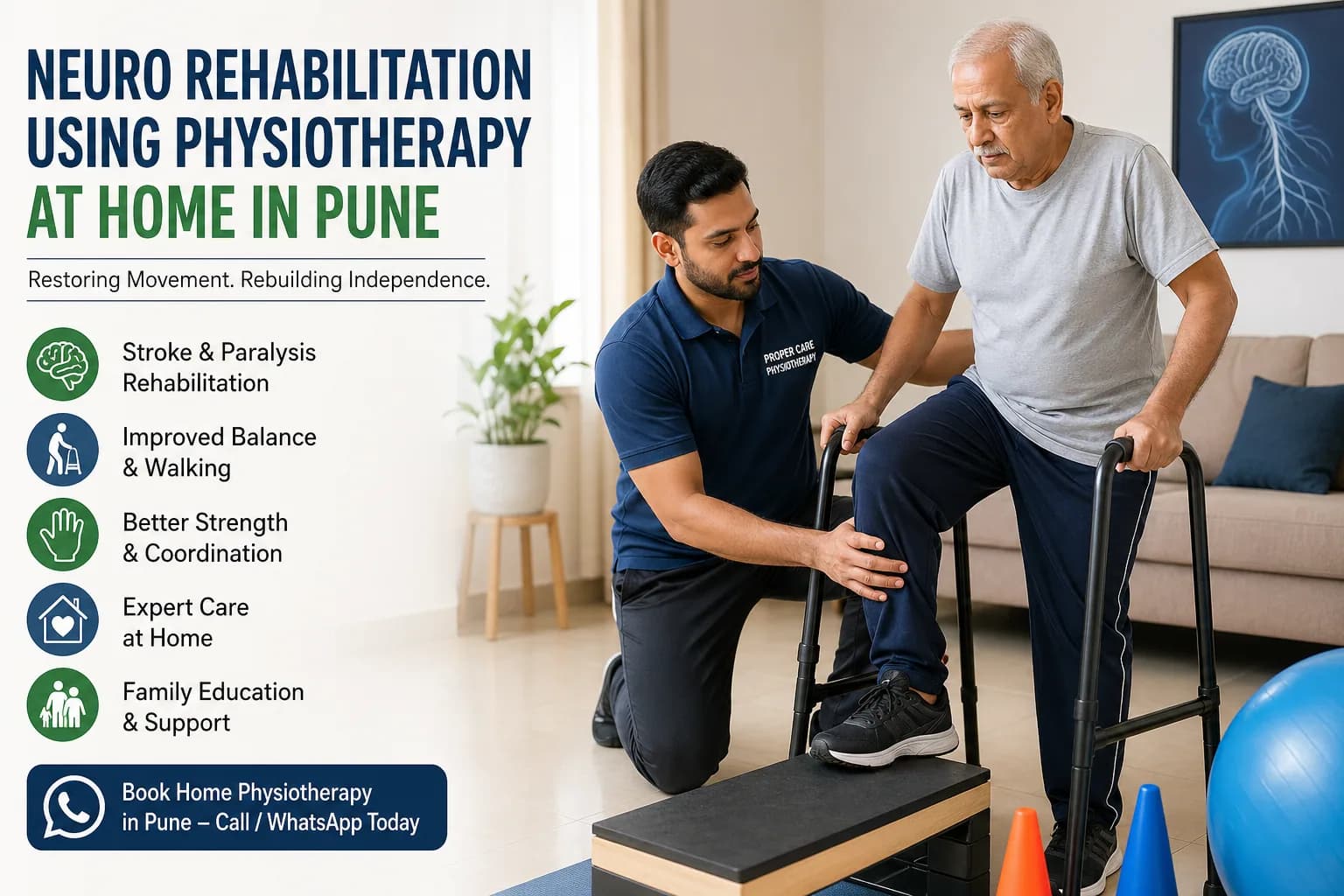
Walking re-education begins when the patient has sufficient trunk control and lower limb strength to attempt supported gait safely. In the home setting, this often starts with short distances alongside a stable surface — a corridor wall, a bed frame — before progressing to indoor walking with or without an aid. Upper limb functional tasks (reaching, gripping, releasing) run alongside gait work throughout this phase.
It is worth being honest with families here: not every stroke patient will walk independently within three months. The severity of the initial stroke, presence of additional conditions like diabetes or cardiac disease, patient motivation, and consistency of daily practice between physiotherapy sessions all affect the pace. Gains in function that might look small clinically — being able to turn in bed independently, or feeding oneself with the non-dominant hand — are meaningful milestones in a person's return to daily life.
Months 3 to 6 and Beyond: Consolidation and Independence
Recovery continues past the 90-day window, though the pace typically slows. Physiotherapy at this stage focuses on building endurance, refining gait quality, reducing reliance on aids where safe, and working on fine motor skills. Fatigue management becomes increasingly important — many stroke patients experience profound tiredness that affects how much they can practise each day. The physiotherapist helps structure activity and rest to maximise what the patient can achieve without crashing.
A Pattern Seen Regularly in South Pune: The Discharge Gap
One recurring situation that comes up in home assessments across areas like Katraj, Kondhwa, and Dhankawadi is what might be called the discharge gap. A patient is discharged from a Pune hospital after 7 to 14 days, given a summary letter and perhaps a brief verbal explanation of exercises. The family, managing the logistics of discharge — transport, medications, home preparation — doesn't arrange physiotherapy immediately. By the time a physiotherapist arrives, it may be 10 to 15 days after discharge.
In those 10 to 15 days, a few things often happen without professional guidance: the patient rests in bed more than necessary, the affected arm is left unsupported for extended periods (contributing to shoulder pain and subluxation), and caregivers — however well-intentioned — assist in ways that actually reduce the patient's active effort. None of this is anyone's fault. It reflects a genuine gap in post-discharge support.
The clinical cost is real though. Joints that have been immobile for two weeks are stiffer than they would have been. Patterns of compensation (using the stronger side exclusively) are harder to modify once they're established. This is not meant to alarm families reading this retrospectively — recovery is still entirely possible, and later starts do not preclude good outcomes. But it reinforces why early home physiotherapy arrangement, ideally before or on the day of hospital discharge, makes a practical difference.
If you are reading this while a family member is still in hospital, that is the right moment to begin arranging home visits. You can read more about what neuro rehabilitation at home involves in our detailed guide: Neuro Rehabilitation Using Physiotherapy at Home in Pune.
Red Flags: When to Pause Physiotherapy and Seek Medical Review
Not every change in a stroke patient's condition represents normal recovery variation. Physiotherapists are trained to recognise signs that warrant immediate medical attention, and families should be aware of these too:
- Sudden new weakness in a limb that was previously showing improvement — this may indicate a second stroke or TIA and requires emergency assessment.
- New onset of severe headache, visual changes, or confusion — again, seek urgent medical review before continuing any physical activity.
- Marked increase in spasticity over a short period, particularly with pain — may indicate a urinary tract infection or other systemic trigger, which is common in stroke patients and affects muscle tone.
- Persistent shoulder pain on the affected side — while some shoulder discomfort is common in stroke recovery, sharp pain with passive movement may indicate subluxation or rotator cuff injury requiring assessment.
- Skin breakdown over bony prominences in patients who are spending significant time in bed or a chair — this is a medical priority and affects how and when physiotherapy can safely proceed.
A responsible physiotherapist will flag these concerns to the family and treating physician rather than continuing treatment as though nothing has changed. If you're managing a patient at home across South Pune and are uncertain about any of these signs, it is always safer to pause and check.
The Caregiver's Role in Stroke Recovery at Home
One aspect of stroke rehabilitation that clinical guidelines acknowledge but patient-facing content often glosses over is how much recovery depends on what happens between formal physiotherapy sessions. A physiotherapist visiting three to five times per week provides structured input for perhaps three hours out of a possible hundred or more waking hours. The rest of those hours are shaped by the caregiver.
This is not a criticism of caregivers — it is an acknowledgment of how important they are. A caregiver who understands how to prompt active movement (rather than doing everything for the patient), how to safely assist a transfer, how to position the affected limb correctly during rest, and how to encourage the patient to use their affected hand for simple tasks is an active participant in the rehabilitation process.
Good home physiotherapy should include caregiver education as a core component — not an afterthought. At each visit, the physiotherapist should demonstrate exercises the caregiver can guide through the day, explain what to watch for, and check that the home setup continues to be safe as the patient's abilities change.
For families managing stroke recovery at home in Pune, including in areas like Ambegaon Budruk, Kondhwa, and Narhe, where access to outpatient clinics may involve significant travel, home visit stroke rehabilitation offers a practical and clinically sound alternative to clinic-based care.
Frequently Asked Questions
Can physiotherapy help if a stroke happened several months ago?
Yes. While the most rapid gains tend to occur in the first three months, meaningful recovery continues for at least 12 to 18 months and sometimes longer. Starting later is always better than not starting at all. The approach adjusts to the patient's current state — later-stage therapy focuses more on function, endurance, and community re-integration than on early motor relearning.
How many sessions per week are needed for stroke rehabilitation at home?
Clinical guidelines recommend daily or near-daily rehabilitation in the early recovery phase, with an emphasis on consistent repetition to drive neuroplasticity. In practice, for home visits in Pune, four to five sessions per week in the acute recovery phase is a reasonable starting point, with frequency adjusted as the patient progresses or stabilises. Daily exercises guided by the physiotherapist and supported by caregivers supplement formal sessions throughout.
What equipment does a home physiotherapist bring for stroke patients?
For stroke rehabilitation at home, a physiotherapist typically brings portable assessment tools, resistance bands for progressive strengthening, balance boards or wobble cushions for proprioceptive work, and where clinically appropriate, portable electrical modalities such as TENS or neuromuscular electrical stimulation (NMES) to support motor re-education in the affected limb. The home environment itself — chairs, walls, beds, corridors — also becomes part of the treatment setup.
Is it safe to start physiotherapy at home immediately after hospital discharge?
For the majority of stroke patients who have been medically stabilised and cleared for discharge, home physiotherapy can and should begin as soon as possible after returning home. The treating hospital team will indicate any precautions — such as blood pressure monitoring during exercise for patients on certain medications, or weight-bearing restrictions following a fall or secondary injury. These precautions guide how physiotherapy begins, but they rarely preclude it entirely. Always confirm with the discharging physician if there are specific restrictions.
Suggested Reading
If you found this article useful, these related guides may also help you navigate stroke and home physiotherapy decisions for your family:
- Neuro Rehabilitation Using Physiotherapy at Home in Pune — a detailed look at the neurological conditions that benefit from home-based physiotherapy and how assessment and treatment work.
- Best Paralysis Physiotherapist in Katraj: Expert Neuro Rehab — specifically focused on paralysis recovery and what the Proper Care approach involves step by step.
- Step-by-Step Stroke Rehab at Home in Narhe, Pune — area-specific guidance for patients in the Narhe locality.
- How to Claim Insurance for Physiotherapy Bills in Pune — practical guidance on documentation and reimbursement for home physiotherapy bills.
Book a Home Physiotherapy Assessment in Pune
If your family member has recently had a stroke and you are trying to work out the next steps, the clearest first move is a clinical home assessment. This gives the physiotherapist a direct picture of current function, home environment, caregiver capacity, and what a realistic recovery plan looks like for your specific situation.
Proper Care Physiotherapy provides home visit stroke rehabilitation across South Pune, including Katraj, Kondhwa, Bibwewadi, Dhankawadi, Ambegaon, and nearby areas. The first visit is a free 45-minute clinical assessment — no commitment required beyond that conversation.
Call or WhatsApp: +91 81412 89582 to arrange a home visit at a time that suits your family.